
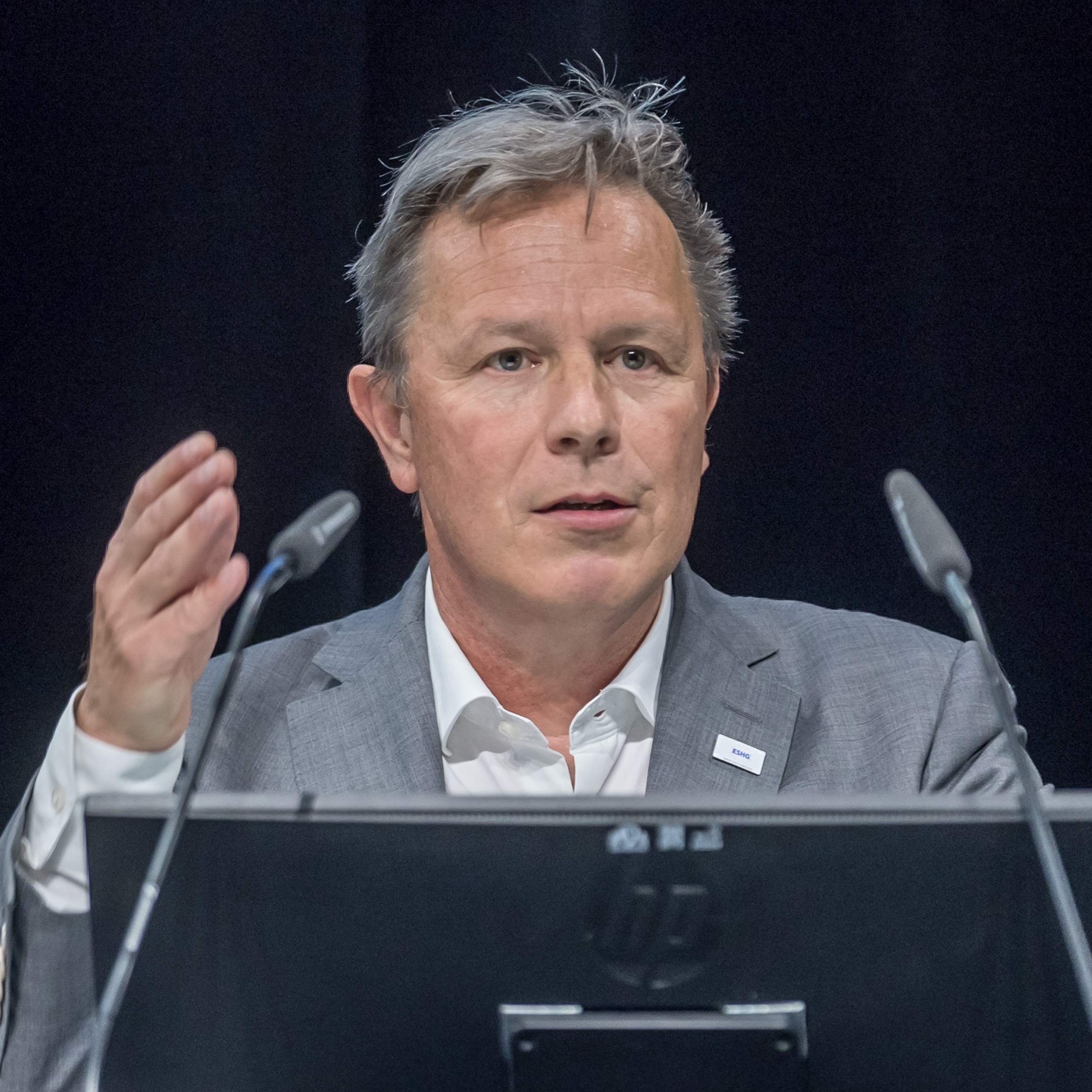
Alexandre Reymond carried out his thesis in the laboratory of Dr. Viesturs Simanis at the Swiss Institute for Experimental Cancer Research (ISREC) and received his Ph.D. from the University of Lausanne in 1993. After completion of his postdoctoral training with Dr Roger Brent in the Department of Molecular Biology, Massachusetts General Hospital and in the Department of Genetics, Harvard Medical School in Boston, he moved to the Telethon Institute of Genetics and Medicine (TIGEM) in Milan in 1998 to lead a research group. He joined in 2000 the Department of Genetic Medicine and Development, University of Geneva Medical School. He moved to the Center for Integrative Genomics in October 2004 and was its Director from 2015 to 2022. He is a past President of the European Society of Human Genetics and the current Chair of its Scientific Program Committee.
Variable expressivity, reduced penetrance and pleiotropy
Recurrent genomic rearrangements at 16p11.2 BP4-5 represent one of the most common causes of genomic disorders. Originally associated with increased risk for autism spectrum disorder, schizophrenia, developmental delay/intellectual disability (DD/ID), adiposity and altered head circumference, these CNVs have since been associated with a multitude of phenotypic alterations with variable expressivity and penetrance. We recently showed that the 31 genes encompassed within the rearranged region act through both direct and indirect pleiotropy. The 16p11.2 BP4-5 CNVs showcase variable expressivity and pleiotropy, as they are deleterious enough to be enriched in clinical cohorts but not enough so to be absent from population cohorts.