
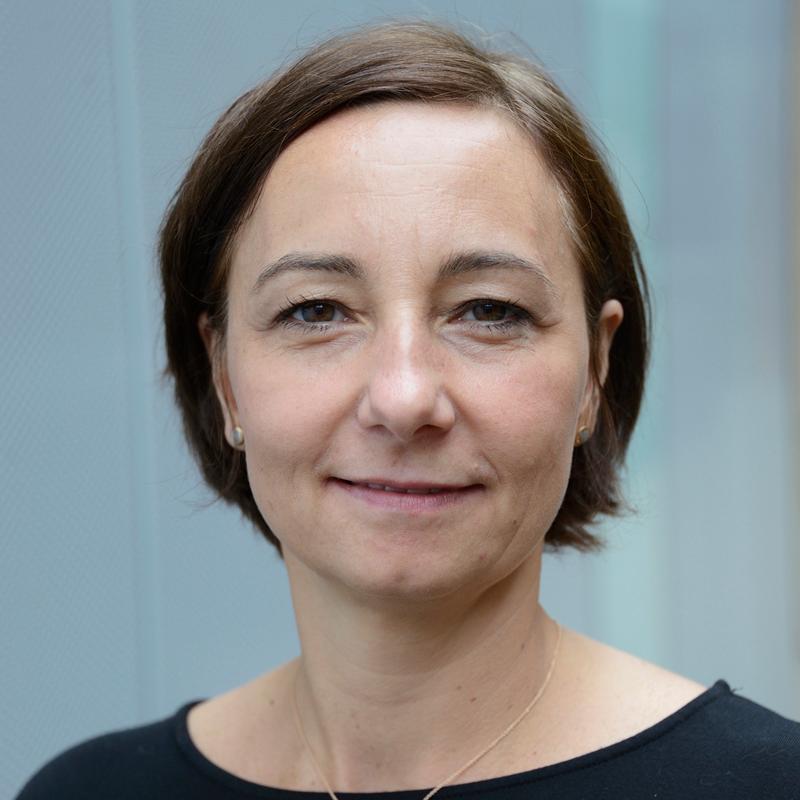
Nicole Soranzo is an internationally recognised human geneticist and Professor of Human Genetics at the University of Cambridge. She joined Cambridge in 2013 as adjunct faculty (Principal of Research) in the School of Clinical Medicine and was awarded a personal chair in Human Genetics in 2015, in recognition of her distinguished contributions to the field. At Cambridge, she has played a leading role in advancing human genomic research within the School of Clinical Medicine and the Department of Haematology. Professor Soranzo spent nearly two decades as a group leader at the Wellcome Sanger Institute, before moving to Milan in 2021 to help establish Human Technopole, where she is currently Head of the Population and Medical Genomics Research Centre. Her research focuses on large-scale genomic analyses to understand how human genetic variation contributes to complex traits and common diseases, particularly cardiovascular, immune, and inflammatory conditions. This work integrates population-scale genome sequencing, multi-omic profiling, and advanced computational approaches to identify genetic loci and biological pathways underlying disease risk and therapeutic opportunity. Professor Soranzo’s academic role combines research leadership, collaborative science, and mentorship. She has supervised doctoral researchers, contributed to interdisciplinary research programmes, and helped develop genomic datasets and resources that are widely used by the international research community. Her major collaborative roles include participation in the Cambridge University Platelet Biology and Cardiovascular programmes, leadership as a Theme Lead within the NIHR Blood and Transplant Research Unit, and involvement in the BHF Cambridge Centre of Research Excellence. In recognition of her scientific leadership, Professor Soranzo has received numerous honours, including Fellowship of the Academy of Medical Sciences, election to EMBO, and award of an ERC Advanced Grant.
Keynote talk
A population-scale single-cell resource of 10M peripheral blood cells with embedded medical data in a multiethnic setting
Linking genetic risk to cellular mechanisms and clinical phenotypes remains a major challenge for precision medicine. While large biobanks spanning diverse ancestries have expanded genetic discovery and begun to reduce disparities in representation, they have largely lacked the cellular resolution needed to interpret genetic risk across populations. Single-cell transcriptomic profiling of peripheral blood mononuclear cells offers a powerful approach, enabling investigation of immune cell diversity and function at unprecedented depth, scale, and resolution. Today I will present insights from a new single-cell transcriptomic resource of nearly 10 million PBMCs from over 6,500 participants drawn from UK Biobank and Genes & Health, capturing predominantly European and South Asian ancestries. Using a unified experimental and computational framework, we constructed a harmonised immune atlas spanning major lineages, canonical subsets, and fine-grained functional states. Critically, participants are embedded within national health systems, enabling integration of genome-wide genetic variation with longitudinal electronic health records encompassing diagnoses, risk factors, and laboratory measurements. Combining single-cell-derived cell abundances with matched clinical haematology, we model immune composition across age, sex, ancestry, smoking, BMI, and disease states, identifying widespread effects of demographic and modifiable risk factors alongside population-specific immune trajectories – features invisible to conventional blood counts. Integrating EHR-derived phenotypes with cell-type-specific expression reveals disease-associated cellular programmes reflecting transcriptional reprogramming beyond abundance changes, including rare cell states linked to viral exposure, inflammation, and premalignant processes. Leveraging genome-wide genotyping and sequencing, we map cell-type-resolved expression quantitative trait loci and rare variants across populations. These analyses reveal shared and ancestry-specific regulatory architecture, improved fine-mapping resolution in non-European cohorts, and population-specific signals suggesting context-dependent gene-environment interactions – linking genetic variation to disease-relevant cellular states. Together, this resource establishes a scalable paradigm for integrating single-cell genomics, genetics, and clinical data at population scale, advancing precision medicine across diverse populations.