
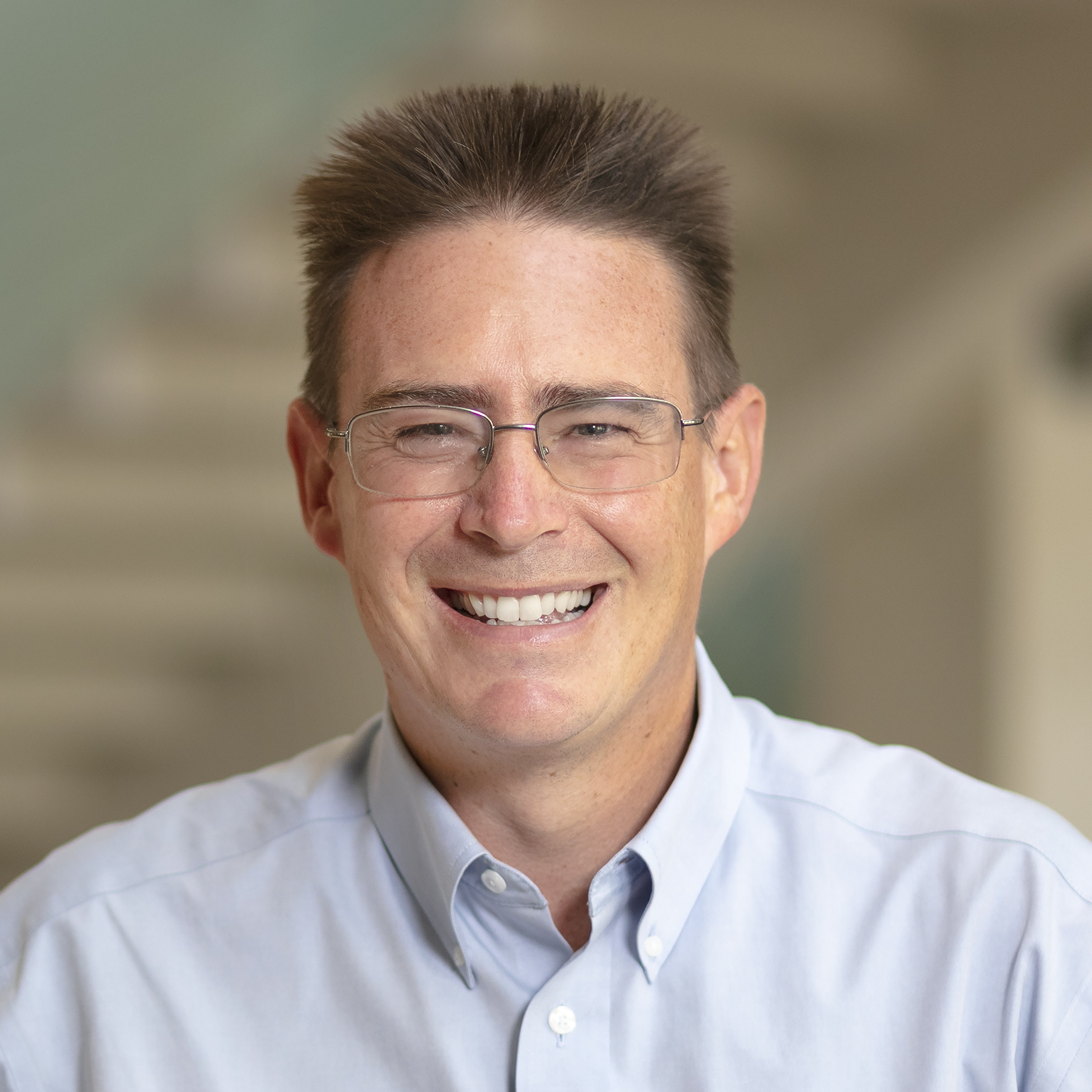
Rob Knight is the founding Director of the Center for Microbiome Innovation and Professor of Pediatrics, Bioengineering, Computer Science & Engineering and Halıcıoğlu DataScience Institute at UC San Diego. He is the Wolfe Family Endowed Chair in MicrobiomeResearch at Rady Children’s. He was elected to the National Academy of Engineering in 2024. He is a Fellow of the American Association for the Advancement of Science and of the American Academy of Microbiology. He was honored with the 2019 NIH Director’s Pioneer Award for his microbiome research and received the 2017 Massry Prize, often considered a predictor of the Nobel. He is the author of “Follow Your Gut: The EnormousImpact of Tiny Microbes” (Simon & Schuster, 2015), coauthor of “Dirt is Good: The Advantage of Germs for Your Child’s Developing Immune System (St. Martin’s Press, 2017), and written over 800 scientific articles. He spoke at TED in 2014 which is viewed over 2.3 million times. His lab has produced many of the software tools and laboratory techniques that enabled high-throughput microbiome science, including the QIIME pipeline (cited over 50,000 times as of this writing) and UniFrac (cited over 12,000 times including its web interface). He is co-founder of the Earth Microbiome Project, the American Gut Project, and the company Biota, Inc., which uses DNA from microbes in the subsurface to guide oilfield decisions. His work has linked microbes to a range of health conditions including obesity and inflammatory bowel disease, has enhanced our understanding of microbes in environments ranging from the oceans to the tundra, and made high-throughput sequencing techniques accessible to thousands of researchers around the world. Dr.Knight can be followed on Twitter (@knightlabnews) or on his website http://knightlab.ucsd.edu/.
Keynote talk
Implementing Microbiome Research within the Personalized Medicine Paradigm
Microbiome research has typically been carried out at the population level. Although the results from such studies – including the Human Microbiome Project, the American Gut Project, SOL, FINRISK, and others – have been impressive, our ability to use them for personalized medicine has been limited. Recent n=1 studies, especially carried out using quantitative long-read sequencing, are starting to provide much more actionable advice at the individual level. In this talk, I describe these advances, and prospects for using AI and digital twins at the individual level to deliver on the promise of the microbiome for personalized medicine.